

Why More Families Are Choosing to Live Along Thika Superhighway
Property along Thika Superhighway
Over the past decade, the idea of where a family should live has shifted significantly. For many households in Nairobi, the traditional pull of living within the inner city is no longer as compelling as it once was. Congestion, rising property prices, and shrinking living spaces have forced a rethink. Increasingly, families are looking outward as a deliberate, strategic choice, not a compromise.
One corridor that continues to stand out in this transition is the Thika Superhighway. What was once primarily a transport route has steadily evolved into one of Kenya’s most attractive residential belts. Today, it offers something many urban areas struggle to provide, a balance between accessibility, space, structure, and long-term value.
A Shift in How Families Define Quality of Life
At the centre of this movement is a broader change in priorities. Families are no longer choosing locations based solely on proximity to the CBD. Instead, there is a growing focus on liveability, stability, and long-term planning.
In Nairobi, the daily realities of traffic along Waiyaki Way, Ngong Road, and Mombasa Road have made commuting unpredictable and often exhausting. As a result, areas connected by more structured road networks, such as Thika Superhighway, are becoming increasingly attractive.
1. Connectivity That Supports Daily Life
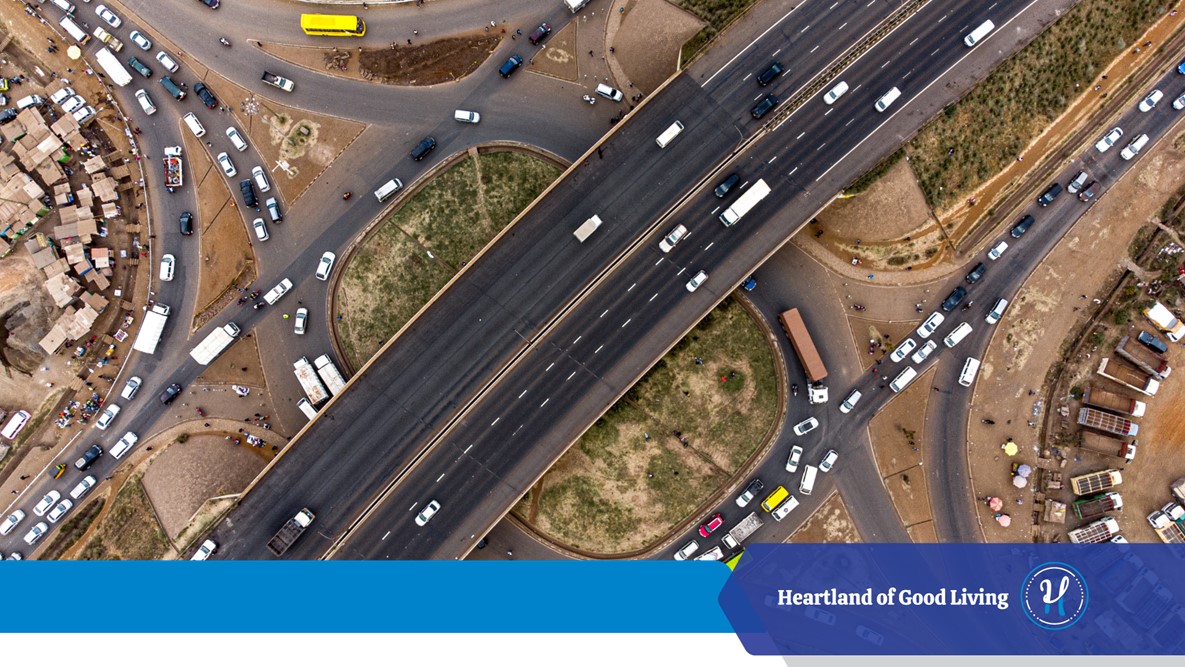
Thika Superhighway remains one of the most efficient transport corridors in the country, linking key economic zones such as Nairobi CBD, Industrial Area, and areas like Ruaraka and Kasarani. For many working professionals, especially those commuting from areas like Roysambu, Kahawa, and Juja, the highway offers a level of predictability that is rare in Nairobi.
Unlike routes that are heavily affected by informal stops and inconsistent flow, the superhighway’s design allows for more structured movement. This does not eliminate traffic entirely, particularly during peak hours, but it significantly improves time planning. For families, this predictability translates into better routines, less stress, and more time spent at home rather than on the road.
2. More Space, More Control
As families grow, so do their spatial needs. Inner-city apartments, while convenient, often limit flexibility. Parking constraints, limited play areas, and fixed layouts can become restrictive over time.
Along Thika Superhighway, the availability of land introduces a different proposition. Areas such as Juja, Ruiru, and Kenyatta Road have seen increased interest from families looking to build rather than rent. Here, homeownership is not just about having a roof over one’s head. It is about control.
Families can design homes that reflect their needs, whether that means additional bedrooms, a home office, or outdoor space for children. What was once a luxury has become a necessity in a post-pandemic era defined by remote work and flexible living.
3. The Rise of Planned Communities
Another major driver is the emergence of structured, master-planned developments along the corridor. Unlike some satellite towns that have grown organically with limited planning, newer developments along Thika Superhighway are increasingly organised, with a clear emphasis on well-designed infrastructure and controlled growth. These communities are characterised by proper road networks that support smooth movement, drainage systems designed to accommodate local weather patterns, and development standards that ensure consistency in design and land use. Security is also a central consideration, with many developments offering gated access that enhances safety and privacy.
For families, this level of planning translates into a more stable and predictable living environment. Children are able to play within safer, controlled surroundings, while residents benefit from a sense of order that is often absent in unregulated neighbourhoods. This shift is particularly significant in the Kenyan context, where poorly planned areas can quickly become congested, strained in terms of infrastructure, and increasingly difficult to navigate over time.
4. Access to Schools and Social Infrastructure
For most families, proximity to quality education is a non-negotiable factor. The Thika Superhighway corridor has responded to this need with a growing number of reputable schools like Juja Preparatory & Senior School, Thika Road Academy, and Woodcreek School among others.
Institutions in areas such as Ruiru, Juja, and Thika town itself continue to expand, offering a mix of local and international curricula. In addition, tertiary institutions like Jomo Kenyatta University of Agriculture and Technology (JKUAT) have contributed to the area’s development by attracting both infrastructure and services.
Beyond education, the corridor also benefits from expanding retail and healthcare access. Malls such as TRM in Roysambu and Spur Mall in Ruiru, as well as hospitals and clinics along the route, make daily life more convenient and reduce the need to travel into the city centre for basic services.
5. Better Value Compared to Inner-City Living
Better value compared to inner-city living is another key factor shaping demand. While property prices in Nairobi’s prime areas continue to rise, they do not always offer proportional value in terms of space or long-term appreciation. In contrast, areas along Thika Superhighway still present relatively accessible entry points, particularly for land acquisition, making them more attractive to families seeking both affordability and future potential.
For many households, this creates a dual advantage. On one hand, there is the opportunity to own and develop property at a manageable cost. On the other, there is strong potential for long-term appreciation as infrastructure continues to improve and the surrounding areas become more established. This is already evident in corridors such as Ruiru and Juja, where land values have shown consistent upward movement.
In Juja in particular, land is experiencing strong appreciation, often exceeding 15–20 per cent annually, driven by its strategic location along the Thika Superhighway and increasing demand for residential development. As of early 2026, the area has recorded some of the fastest growth among Nairobi’s satellite towns, with an acre now averaging above KSh 26 million. These trends suggest that the upward trajectory is likely to continue as development momentum builds.
6. A Calmer, More Grounded Living Environment
Beyond the practical considerations, there is a lifestyle shift taking place. Living within Nairobi often comes with constant noise, density, and a sense of urgency. Over time, this can affect overall well-being. Residential areas along Thika Superhighway offer a different rhythm.
While still connected to the city, they provide a degree of separation that allows families to experience quieter, more intentional living. Even within a short distance from Nairobi, the difference in pace is noticeable. For many households, this balance between access and calm is one of the most compelling reasons to move.
7. Security and Predictability Matter More Than Ever
Safety remains a top priority for families. Gated communities and controlled developments along the corridor offer features such as perimeter fencing, regulated access, and organised layouts.
These elements contribute to a stronger sense of security and community. In contrast to more fragmented urban areas, residents in planned environments often experience greater peace of mind, which is particularly important for families raising children.
Conclusion
The growth of Thika Superhighway as a residential hub is not incidental; it is underpinned by sustained infrastructure investment and consistent demand. As new developments continue to take shape and essential services expand, the corridor is steadily evolving into a more self-sufficient ecosystem. This progression reduces reliance on the Nairobi CBD while reinforcing the case for long-term settlement along the corridor.
For many families, relocating along Thika Superhighway is no longer about moving away from the city. It reflects a deliberate and forward-looking choice about how and where to live. The corridor offers a compelling balance of connectivity without constant congestion, space without prohibitive cost, and structure without the disorder often associated with unplanned areas. It also presents a clear pathway to home ownership and long-term stability.
This is why more families are making the shift, not out of necessity, but because it aligns with their aspirations for a more organised, secure, and future-oriented way of living.


